
Case Studies
A look at the operational challenges we've tackled and the structured approaches our team has applied to drive measurable improvement.
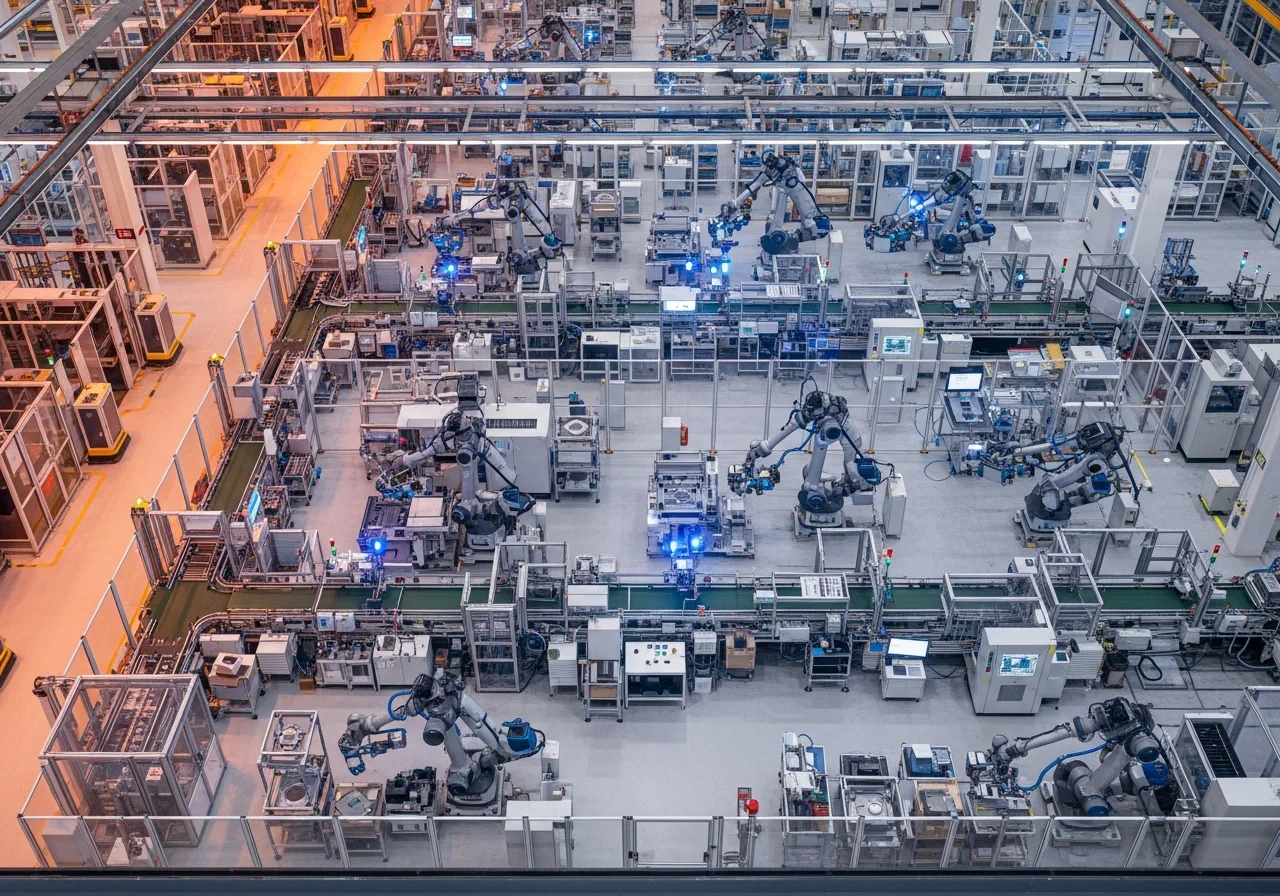
Pacific Rim Fabrication
A structured operational assessment and process optimization engagement for a growing mechanical fabrication company specializing in pre-packaged water component assemblies and chamber systems for civil infrastructure projects.
The Challenge
Pacific Rim Fabrication was experiencing growing strain on throughput, delivery reliability, and scalability as demand for fully assembled units increased. Manufacturing operations remained largely informal — with no validated cycle-time data, limited shop-floor visibility, inefficient inventory staging, and unmanaged bottleneck operations in grooving and welding. While an ERP system was in place, its capabilities were significantly underutilized at the shop-floor level.
Our Approach
Discovery & Stakeholder Interviews
Conducted shop floor walkthroughs, stakeholder meetings, and workflow reviews to map the end-to-end current state without assumptions.
Bottleneck & Cycle Time Analysis
Identified grooving and welding as the primary system constraints and performed cycle time estimation to quantify throughput impact.
Inventory & ERP Assessment
Evaluated existing NetSuite ERP utilization and assessed material staging, kitting, and inventory accuracy gaps against a barcode/WMS solution.
Capacity & Investment Analysis
Conducted a comparative cost–benefit analysis of adding labor versus investing in a multi-function grooving/welding machine to resolve the identified bottleneck.
Outcomes & Deliverables
- Current-state and future-state process maps documenting the full fabrication workflow
- Bottleneck identified in grooving/welding — targeted equipment investment recommended over incremental labor hiring
- Phased implementation roadmap covering cycle-time tracking, quality traceability, and inventory control
- NetSuite-integrated mobile barcode/WMS solution selected as the inventory improvement path
- 5S workplace organization framework proposed to reduce wasted motion and stabilize production flow
- Conservative break-even analysis of approximately 2.5 years for equipment investment with sustainable throughput gains

Confidential Manufacturing Client
An engineering design and prototype development engagement to address quality inconsistencies and operator strain in a manual production process, delivering a budget-conscious semi-automated solution with measurable performance gains.
The Challenge
A manufacturing client was facing compounding inefficiencies in their manual production process: persistent quality issues driven by process variability, operator fatigue and ergonomic strain from repetitive manual tasks, and inconsistent output that was limiting the company's ability to scale. The client recognized that full automation was not feasible within their budget, and engaged 8Minds to identify a targeted semi-automation strategy that could deliver meaningful improvement without a large capital commitment.
Our Approach
Workflow Audit & Root Cause Analysis
Conducted a detailed audit of the existing manual production process to identify the specific sources of quality variation, cycle time loss, and operator strain.
Automation Concept Development
Brainstormed and evaluated multiple semi-automation concepts against budget constraints, feasibility, and projected impact — selecting the highest-value approach.
Prototype Engineering
Designed and built a semi-automated prototype incorporating targeted heating for precision process control and adaptive mechanical applicators to replace manual steps.
Modular & Scalable Architecture
Engineered the solution with a modular design framework, ensuring the prototype could serve as the foundation for future AI or robotics integration as the business grows.
Outcomes & Deliverables
- 30–50% reduction in defect rate achieved through consistent, repeatable process controls replacing manual variability
- 40% reduction in cycle time driven by semi-automated execution of previously manual production steps
- Significantly enhanced operator safety and ergonomics by eliminating repetitive strain-inducing manual tasks
- Modular system architecture designed and validated for future AI and robotics expansion without redesign
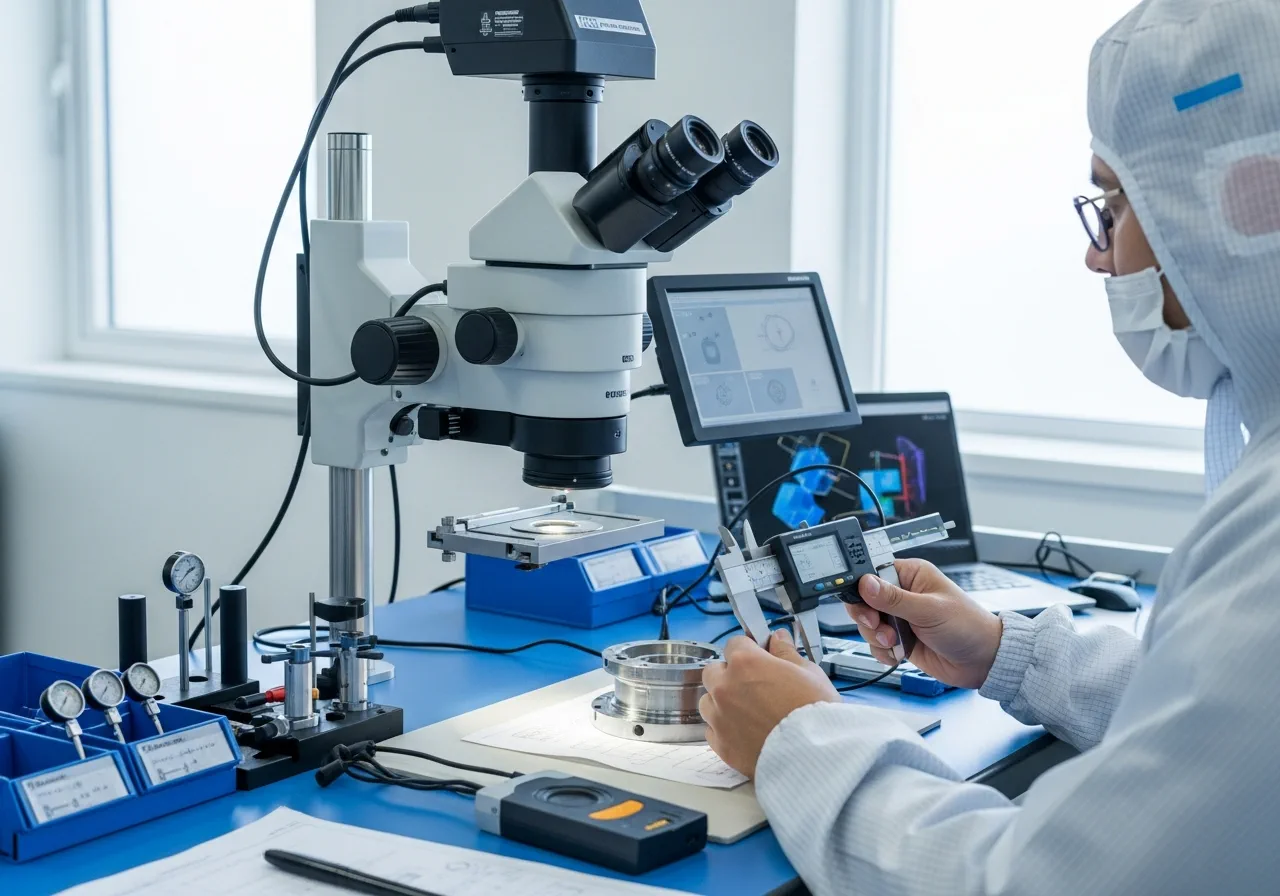
Confidential Concrete Company — Toronto
A collaborative materials engineering engagement with a leading Toronto concrete company to develop sustainable concrete solutions that significantly reduce embodied carbon without compromising mechanical performance.
The Challenge
The client sought to reduce the embodied carbon footprint of their concrete products in response to growing industry and regulatory pressure to decarbonize construction materials. The challenge was to partially replace traditional Portland cement — one of the most carbon-intensive materials in the industry — with secondary cementitious materials, while ensuring that the resulting concrete met all mechanical performance specifications for compressive and tensile strength, workability, and long-term durability.
Our Approach
Sustainable Mix Design Optimization
Systematically optimized concrete mixture proportions, replacing Portland cement with secondary cementitious materials to minimize carbon content while maintaining workability and performance targets.
Mechanical Performance Analysis
Validated compressive and tensile strength of optimized mixes against project specifications through structured testing programs, confirming performance equivalence or improvement at each design iteration.
Advanced Material Characterization
Applied X-ray diffraction (XRD), scanning electron microscopy (SEM), and thermal analysis to evaluate material microstructure, hydration products, and reaction mechanisms in the optimized concrete.
Life Cycle Assessment (LCA)
Quantified the embodied carbon reduction of the optimized concrete formulation using life cycle assessment methodology, providing the client with verified carbon performance data for reporting and certification purposes.
Outcomes & Deliverables
- Significant reduction in embodied carbon achieved through optimized partial replacement of Portland cement with secondary cementitious materials
- Compressive and tensile strength maintained at or above project specification thresholds across all optimized mix designs
- Microstructural characterization via SEM and XRD confirmed improved hydration product distribution and material homogeneity
- Life cycle assessment provided verified, quantified carbon reduction data to support client sustainability reporting and low-carbon product claims
Facing similar operational challenges?
Our team brings the same structured, evidence-driven approach to every engagement. Let's start with a conversation about your operations.
Get in Touch